Engineered laminates that bend perfectly around tight radii for smooth, edge-free surfaces — built for architects, fabricators, a nd industrial buyers.
Every property of our postforming laminates is engineered to meet the demands of modern fabrication — from tight bends to flawless surface finishes.
Tight Radius Ready
Engineered for smooth bending around radii as tight as 6mm without cracking or delamination.
Seam-Free Edges
Wraps cleanly around profiles for a continuous, joint-free surface finish.
Durable Surface
Resistant to scratches, heat, and impact — built for high-traffic commercial environments.
Efficient Forming
Compatible with standard postforming machines for fast, consistent production runs.
Material Compatibility
Bonds reliably with MDF and particleboard substrates for versatile applications.
Edge Matching
Coordinated PVC edgebanding available for a seamless, professional edge finish.
— Technical Data
Specification Overview
Precise material data for engineers, fabricators, and specification writers.
Specification
Detail
Type / Standards
HPL — EN 438, NEMA LD3
Thickness
0.6mm / 0.7mm / 0.8mm
Sheet Size
4×8 ft / 4×10 ft
Finishes
Matte / Suede
Forming Temperature
160–180°C
Min Bending Radius
6mm – 16mm
Substrates
MDF / Particleboard
Adhesives
Contact / PVA / PUR
* Specifications are indicative. Actual performance may vary based on substrate, adhesive, and forming conditions. Always conduct pre-production trials.
Follow these guidelines to achieve consistent, defect-free postformed surfaces every time.
Proper Storage & Conditioning
Store flat in a dry environment at 18-25°C.Condition sheets for 24 hours forming to stabilise moisture content.
Uniform Heating Before Forming
Apply even heat across the full bending zone. Uneven heating causes stress lines and surface defects.
Maintain Correct Radius
Never exceed the minimum bending radius specified for the thickness. Tighter bends risk micro-cracking.
Rounded Cut-Outs
All internal cut-outs must have rounded corners (min 5mm radius) to prevent stress concentration and cracking.
Follow Adhesive Guidelines
Use manufacturer-recommended contact, PVA, or PUR adhesives. Ensure full coverage and correct open time.
— Application Showcase
Where Postforming
Performs
From kitchen countertops to curved architectural panels — postforming laminates deliver seamless results across every application.
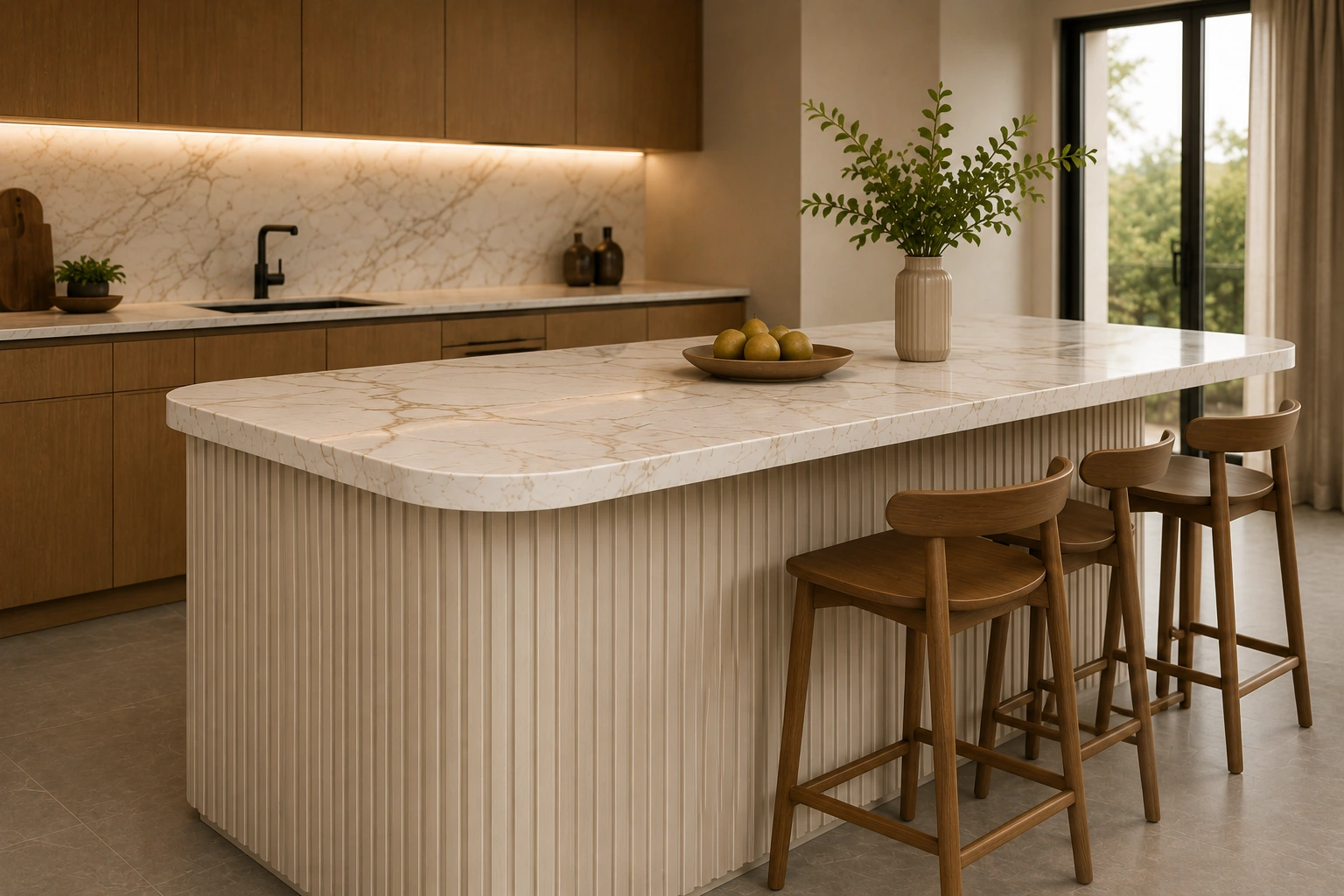
Kitchen Countertops
Kitchen countertops that blend functionality
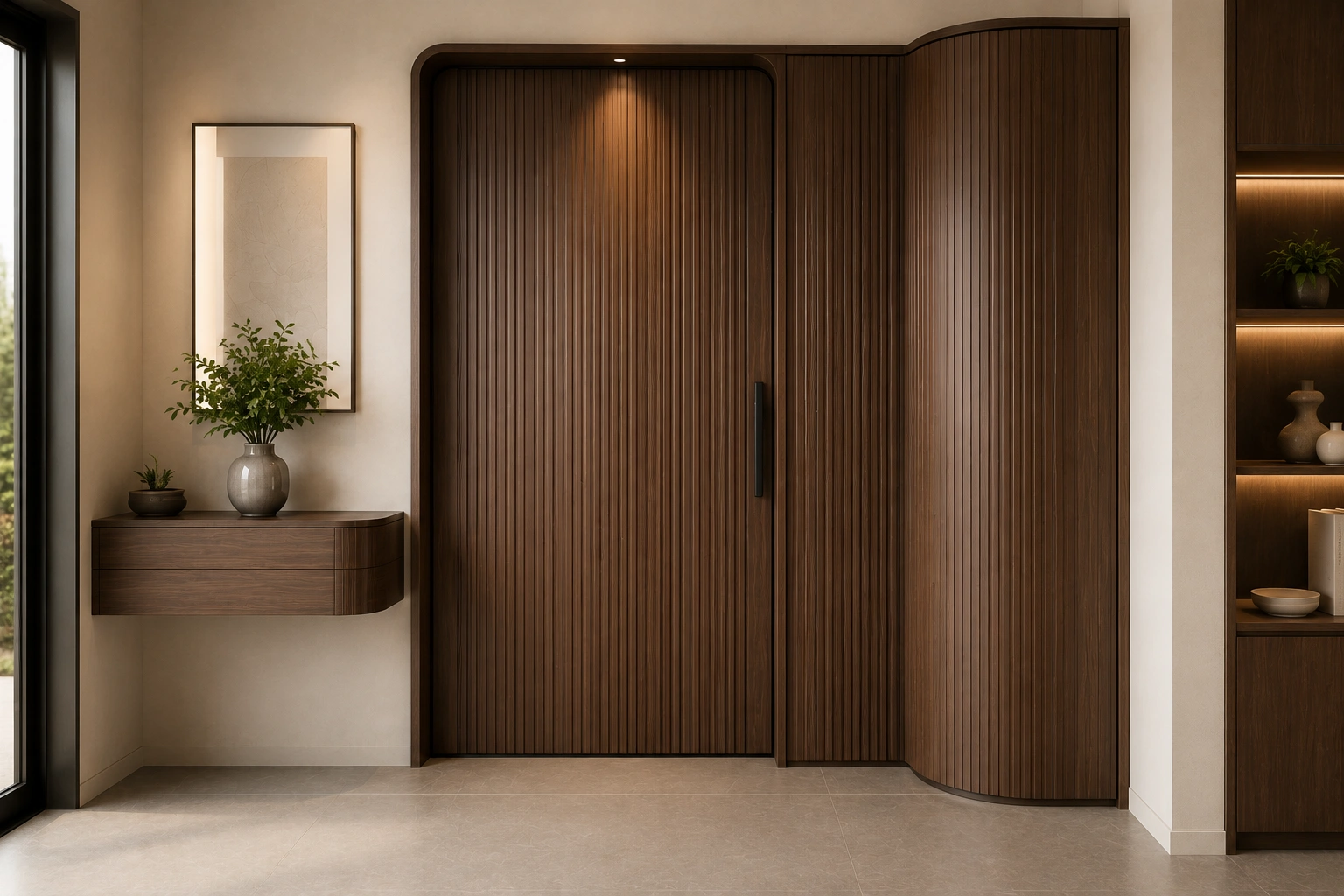
Doors & Shutters
Doors and shutters that combine security
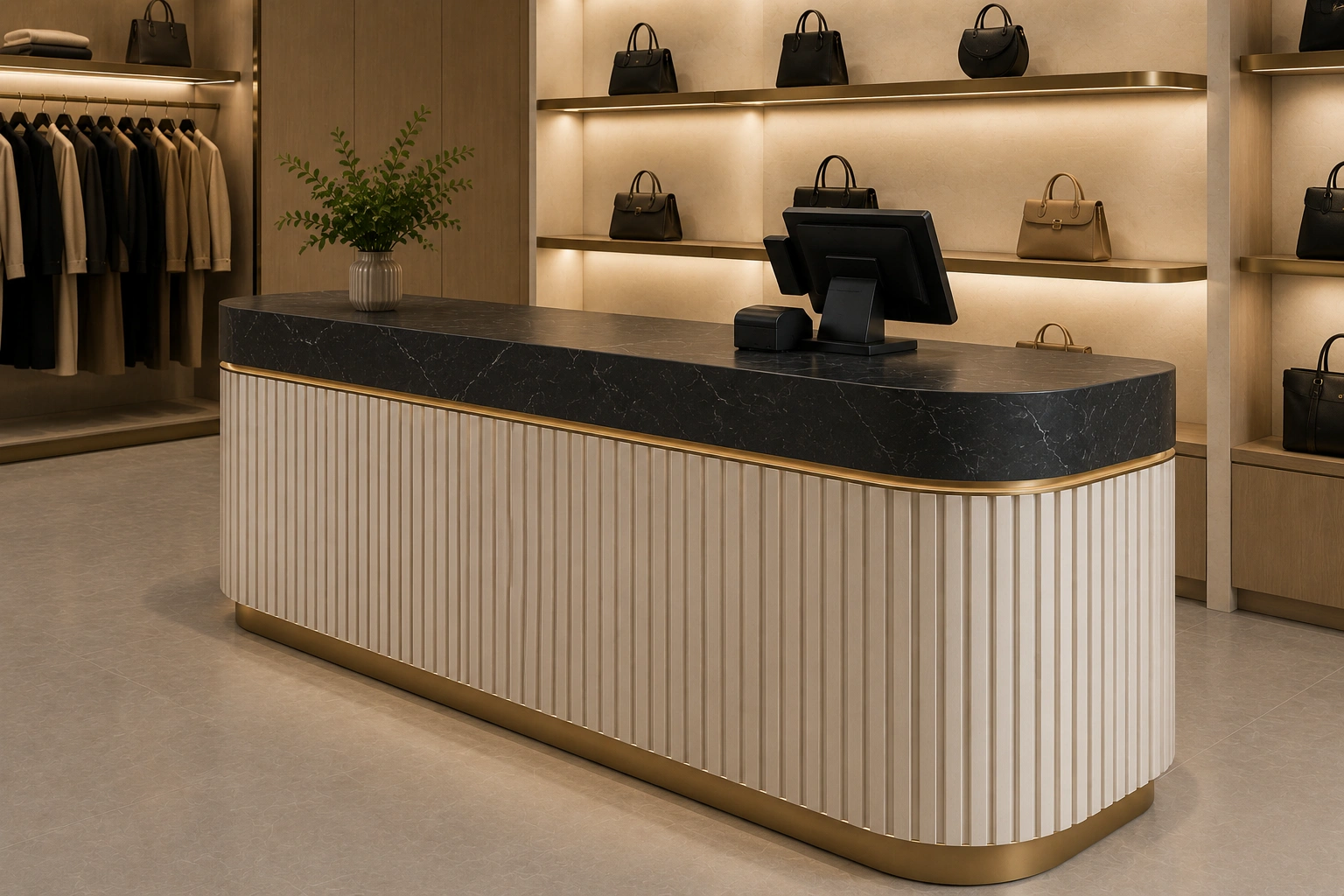
Retail Counters
Retail counters designed to enhance customer
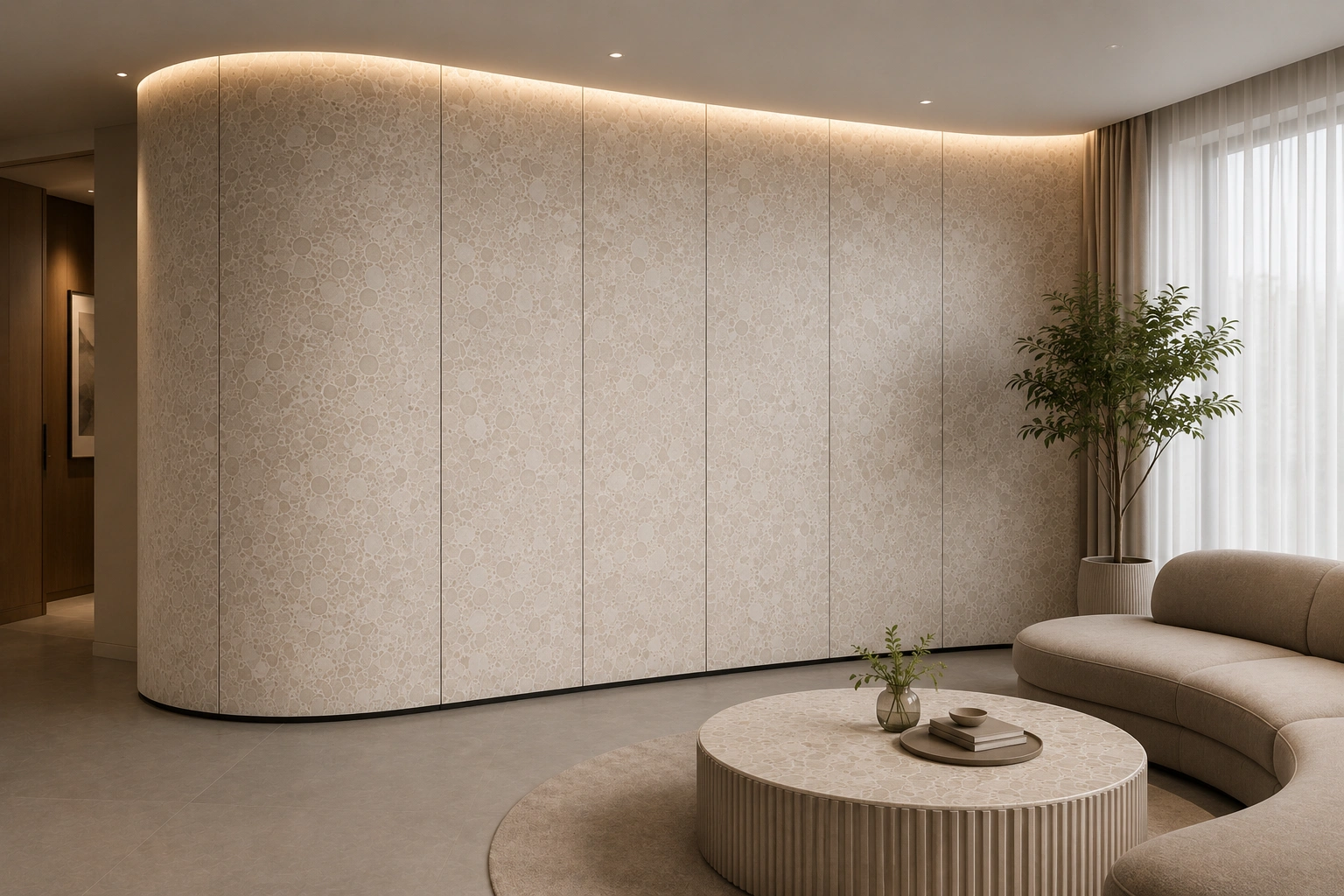
Curved Wall Panels
curved wall panels that add depth
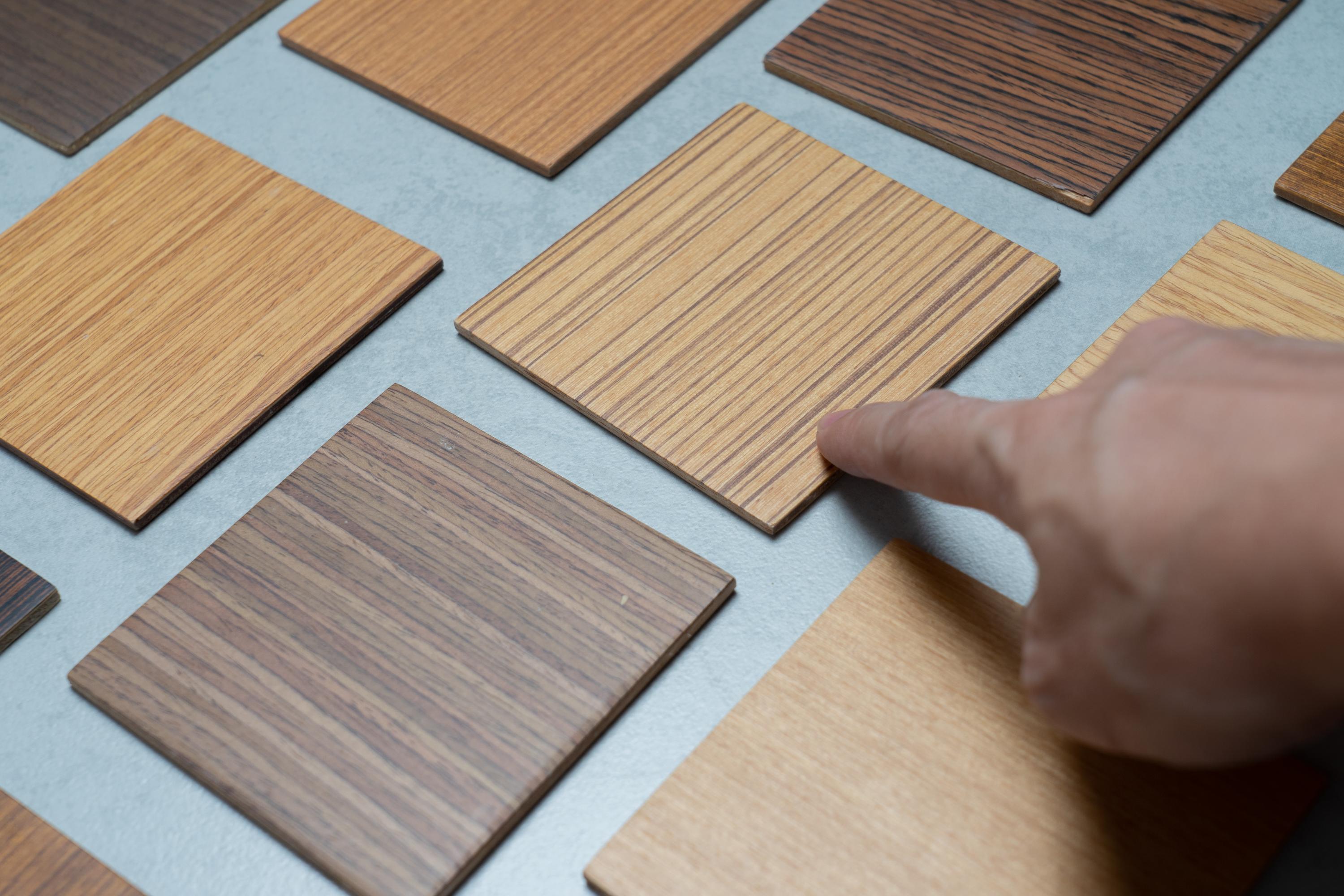
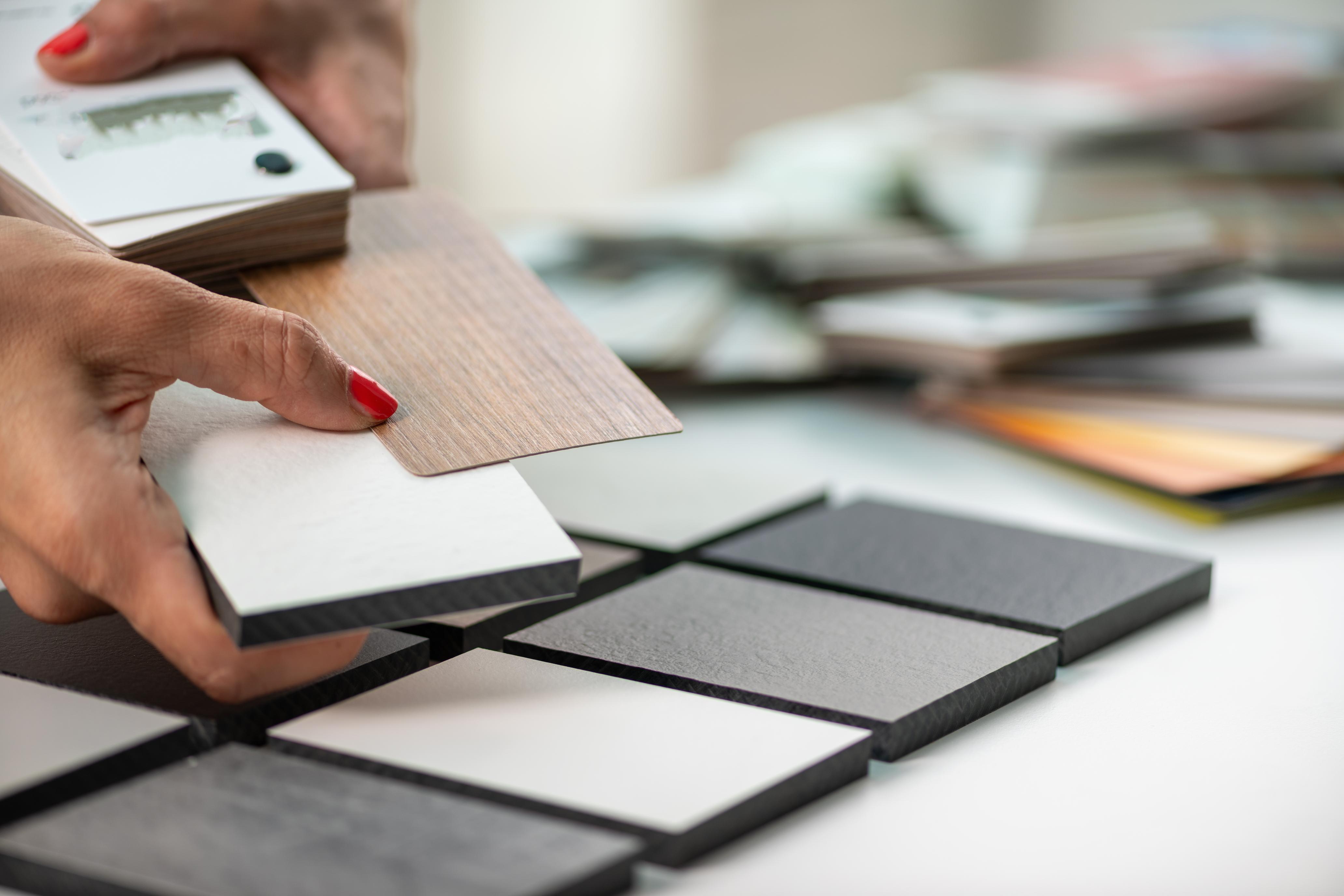
Colours & Finishes
Suede/Matte initially; additional Wonderlam textures will be enabled post radius validation. Colour‑ and texture‑matched Wonderlam PVC Edgebanding available.
The minimum bending radius depends on thickness: 0.6mm can achieve 6mm radius, 0.7mm achieves 8–10mm, and 0.8mm achieves 12–16mm. Always test with your specific substrate and adhesive combination before full production.
0.8mm is the most commonly used thickness for kitchen countertops and horizontal surfaces due to its balance of formability and surface durability. For tighter radii on vertical applications, 0.6mm or 0.7mm is preferred.
Contact adhesive is the industry standard for postforming applications. PVA is suitable for flat lamination, while PUR (polyurethane reactive) adhesive offers superior moisture and heat resistance for demanding environments.
Yes. Postforming laminates are suitable for both horizontal (countertops, worktops) and vertical (cabinet doors, wall panels) applications. Horizontal surfaces may require thicker grades for added impact resistance.
Yes, fire-retardant (FR) grades are available on request and comply with relevant EN fire classification standards. These are recommended for commercial, hospitality, and public-sector projects. Contact our technical team for specifications.
This website uses cookies to enhance your browsing experience.